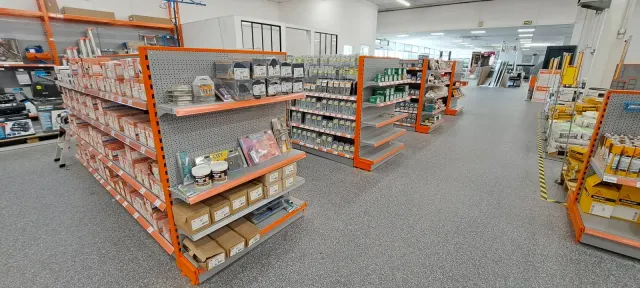
What is a store gondola? +
A gondola is a store’s central shelving unit, single- or double-sided, made of uprights, back panels and adjustable shelves. It is the core fixture of an aisle: it structures the layout and carries most of the self-service product lines.
What load can a DIY gondola shelf carry? +
The Store Fitting catalogue, printed pages 54–55, publishes loads only for specified assemblies and conditions. Capacity depends on upright, foot or console, depth, notch count and load distribution; no single load per level is published.
What gondola heights suit a DIY store? +
No universal height range is published for the whole range. The catalogue documents components and conditional dimensions; final upright, depth and height must be validated for the model and layout.
Single-sided vs double-sided gondola: what’s the difference? +
A single-sided gondola backs onto a wall; a double-sided one forms a central island accessible from both sides. A typical layout combines single-sided units on the perimeter and double-sided islands in central aisles.
Can accessories be added to an existing gondola? +
Yes, depending on the support: shelves, hooks, dividers, supports and label holders can extend the run; plain or perforated backs determine the compatible accessories. For another manufacturer’s gondola, hook compatibility must be checked.
How is a DIY gondola installed? +
The layout study sets the bays, circulation and safety points before delivery. Fixing, anchoring and installation conditions depend on the floor and selected configuration, so they must be specified and confirmed in the quotation.
What maintenance does store gondola shelving require? +
Plan regular visual checks of uprights, shelves, hooks and label holders, and remove damaged or overloaded components. The product source does not specify cleaning products or a finish-specific schedule, so those details should be confirmed for the project.
Which safety rules or certifications should be checked? +
The sources reviewed do not document a product-specific certification for this sheet. Loads, anchoring, circulation routes, exits and any rules applying to the store must be checked for the selected configuration with the design team and, where needed, the site safety lead.